How Marcomms Teams Can Use AI
How AI can give communications teams their time back to focus on the message, and the workflows where those hours are being lost today.
Marketing and communications teams produce a constant stream of material under approval: press releases, statements, campaign copy, decks, reports. Most of it passes through several hands before it is published, because it carries the organisation's name and has to be right. That review layer is necessary, but it is also where the time goes.
Adobe's 2025 research, drawn from more than 1,600 marketers, found that 58% of them spend upwards of 40% of their time managing reviews and approvals rather than producing work. The wider pattern sits underneath it: knowledge workers lose close to a fifth of the working week simply locating information that already exists somewhere in the organisation. For a communications team, that is the approved version of a document, the last position taken on an issue, the correct phrasing of a product name.
At the same time, the volume is rising. Seventy-one percent of marketers expect the demand for content to grow at least fivefold between now and 2027. The number of people doing the work is not growing at the same rate. That is the pressure AI is being brought in to relieve, and where it is applied decides whether it helps.
What "using AI" means for a communications team
A general-purpose AI tool has no knowledge of the organisation using it. It has not seen the brand guidelines, the house style, the agreed terminology, or anything the team has published before, so it produces plausible text that then has to be corrected back into line. The gap is not the model's capability. It is the absence of context.
A system built for the work supplies that context and applies it to every task. Three properties make the difference:
Memory
The system retains the team's own material, its approved brief formats, brand voice, terminology, and past releases, so that context is available on every job and does not leave when a staff member does.
Retrieval
For each task, it draws on the specific material that applies: the relevant brief, the prior statement on the subject, the correct entry from the glossary, rather than producing generic text that a person then has to rework.
Governed action
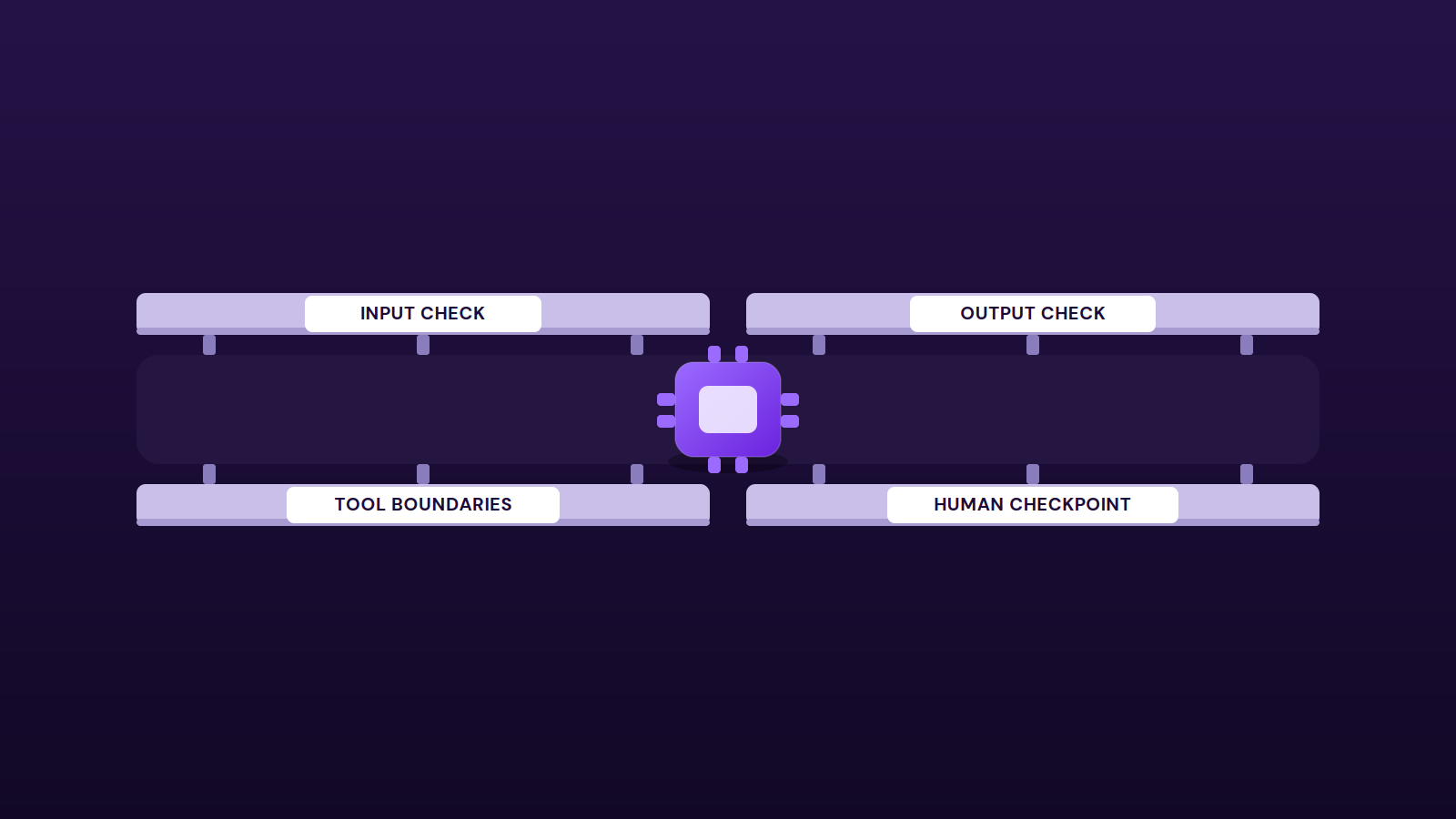
It operates inside the team's existing sign-off process and records what it produced against what a person changed. Nothing bypasses approval, and every output is traceable.
That final property is what makes the difference for communications specifically. When the material carries the organisation's name, an audit trail and an approval gate are not overhead. They are what allow the work to move faster without giving up control of it.
The use cases
These are the points in a communications team's work where the approach applies most directly. The first three carry the largest share of the routine load. The others extend the same system into the work that surrounds it.
Drafting media releases and statements
What it is. A drafting step that produces a first version of a release or statement from a completed brief, written in the team's established format and voice and grounded in the organisation's previous public positions.
How it is used. The brief is submitted in the format the team already uses. The system returns a structured draft that follows house style and reflects what has been said before on the subject. A communications professional then edits, adjusts the emphasis, and takes it into the normal approval process. It is most valuable on reactive statements, where a first version is needed quickly and has to be consistent with prior positions under time pressure.
The benefit. The team no longer assembles a starting point from scratch each time. The hours move from producing a first draft to refining it, which is where professional judgement actually adds value: the specific wording, the line that needs care, the decision about what to leave out.
Automated compliance and brand checks
What it is. An automatic check that reviews a draft against the brand guidelines, approved terminology, required disclaimers, and previously published positions before it moves to human review.
How it is used. The brand and compliance rules are held by the system as reference. As a draft moves through, it is measured against them, and departures are flagged, wrong product name, missing disclaimer, a claim that contradicts an existing statement. The routine checks are completed before a reviewer sees the work; the person then makes the judgement calls rather than the mechanical ones.
The benefit. This addresses the review load directly. A large part of the 40% of time spent on approvals is procedural checking that does not require human judgement. Handling that automatically shortens the review cycle and leaves the reviewer to focus on the parts that genuinely need their attention.
An internal knowledge assistant
What it is. A searchable point of access to the team's own history: past releases and campaigns, the positions taken on particular issues, and the reasoning behind previous decisions.
How it is used. A team member asks a direct question, what was said about this last year, where the final version of a release is, why a subject was framed a certain way, and receives an answer drawn from the organisation's record rather than from memory or a search through shared drives. Because the reasoning behind decisions is retained alongside the decisions themselves, the answer explains the why, not only the what.
The benefit. This is where much of the lost search time sits. Making the team's history directly answerable removes a recurring interruption, and it keeps institutional knowledge in place when experienced staff leave, rather than losing it with them.
The routine checks are finished before a reviewer opens the draft. What remains is the judgement, not the checklist.
Building presentation decks
What it is. A step that assembles a first-draft presentation from approved facts and data the system already holds, formatted to the brand template.
How it is used. For recurring decks, campaign results, activity summaries, launch plans, the system produces a formatted first version from the approved source material, which the team then edits and finalises rather than building from an empty template.
The benefit. It removes the manual reformatting of information the team has already approved elsewhere, and keeps every deck consistent with the brand without a separate design pass.
Monthly performance and activity reporting
What it is. An automated compilation of the recurring monthly report from activity the system already holds.
How it is used. Instead of gathering results and activity from several places and assembling them by hand each cycle, the team receives a compiled draft to review and adjust, because the underlying information is already in the system.
The benefit. A recurring manual task becomes a review task. The reporting still gets a human check, but the assembly work that consumed the time is handled.
The capability underneath
None of these depend on anything specific to communications. A memory that persists through staff turnover, a retrievable history that carries the reasoning behind past decisions, and action taken inside an audit trail and approval gates are general capabilities. Communications is a clear place to apply them because the work is fast, frequent, and visible, but the same structure holds elsewhere.
Applied to a different team, the specific actions change while the pattern does not: retrieve the relevant context, act on it, record what happened, and route it for approval. That is why a deployment that proves itself in one team tends not to stay there.
The work that comes back
Clearing the routine load is not the objective in itself. What matters is what it returns to the team. Communications is a discipline of judgement: deciding what to say, how to say it, when not to comment, and which relationships to protect. That work cannot be automated, and it is the first thing to suffer when a team is absorbed in version control, manual checks, and document assembly.
Handing the drafting, checking, and formatting to a system that performs them reliably allows the people in the team to return to the work they were hired to do. The message, the judgement, and the relationships behind it.
Sources
- Adobe, research across more than 1,600 marketers (2025): 58% of marketers report spending more than 40% of their time managing reviews and approvals rather than creating content. business.adobe.com.
- McKinsey Global Institute, The Social Economy: Unlocking value and productivity through social technologies (2012): the average interaction worker spends nearly 20% of the workweek looking for internal information or tracking down colleagues who can help with specific tasks. mckinsey.com.
- Adobe, research across more than 1,600 marketers (2025): 71% of marketers anticipate the demand for content will grow more than fivefold between now and 2027. business.adobe.com.
Want this in your business?
If giving marcomms teams their review time back with AI that knows the brand, retrieves prior positions and works inside the existing approval process is something you're facing, it's exactly what we build in our Inside your stack work.
Frequently asked questions
Where should a marcomms team start with AI?
The three workflows carrying the largest share of the routine load: drafting media releases and statements from completed briefs, automated compliance and brand checks before human review, and an internal knowledge assistant that answers questions from the team's own history.
Why does a general-purpose AI tool fall short for communications work?
It has not seen the brand guidelines, the house style, the agreed terminology, or anything the team has published before, so it produces plausible text that then has to be corrected back into line. The gap is context, not model capability. A system built for the work supplies memory, retrieval and governed action.
Will AI replace the approval process in a communications team?
No. The system operates inside the team's existing sign-off process and records what it produced against what a person changed. Nothing bypasses approval, and every output is traceable. The approval gate is what allows the work to move faster without giving up control of it.
How much time do reviews and approvals cost a marketing team today?
Adobe's 2025 research across more than 1,600 marketers found that 58% of them spend upwards of 40% of their time managing reviews and approvals rather than producing work. A large part of that is procedural checking that does not require human judgement, which is exactly what automated brand and compliance checks remove.
How does Codefully do this?
We deliver this as Inside your stack. AI embedded into the tools your team already uses — no rip-and-replace.